
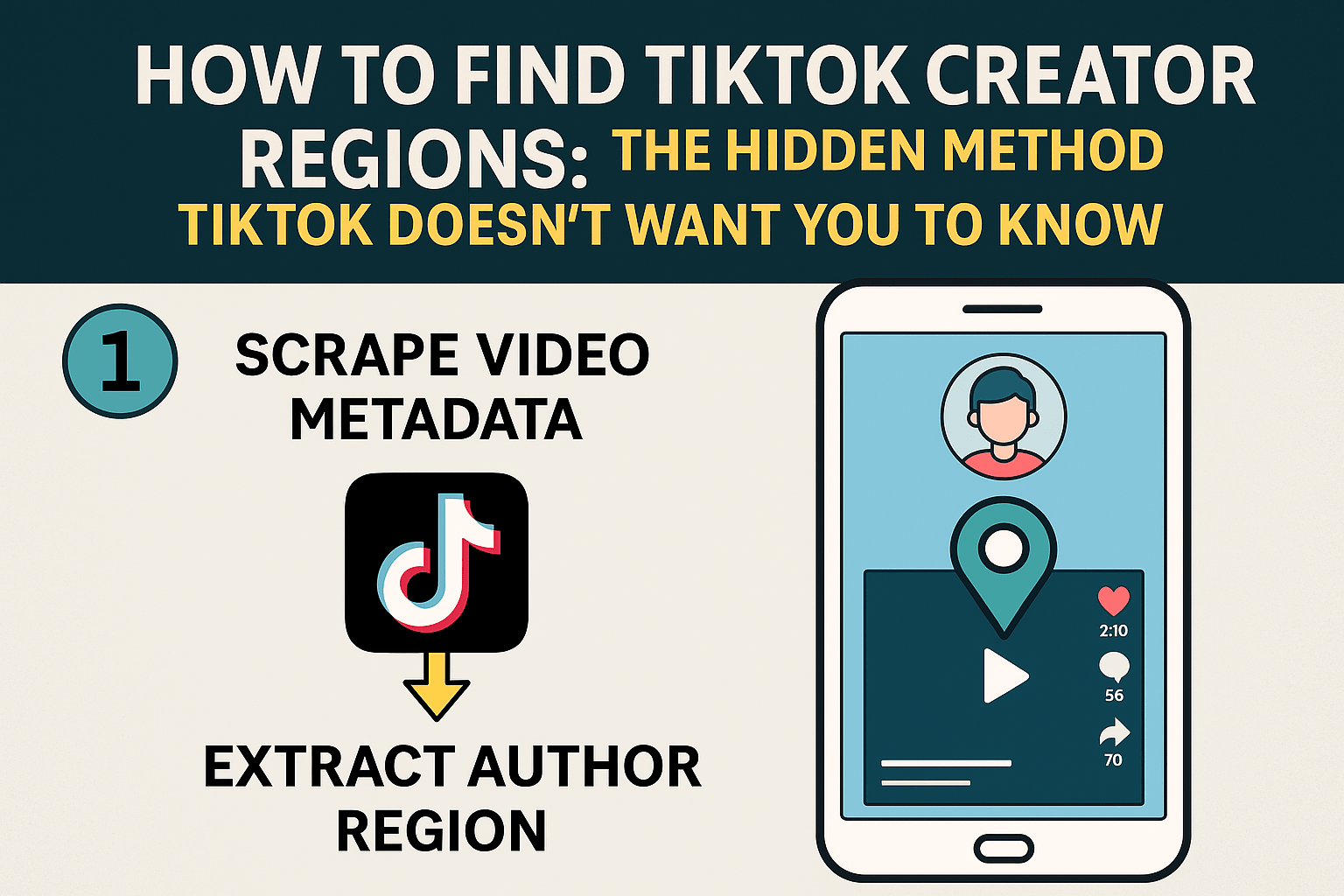
TikTok creator region is the country code tied to an account—data TikTok used to show on profiles but now hides from the UI.
It still ships in public video metadata. Every load returns an author object with a region field (for example US or UK).
That matters when you filter influencers by market, study global trends, or validate where content is made:
- Scrape one video per creator—the region stays consistent
- Read
author.regionfrom the API response - Skip profile pages that no longer display location
In this guide, you’ll learn:
- Why TikTok removed region from profiles but kept it in the backend
- A four-step video-scraping workflow to recover the field
- What the metadata looks like in real JSON
- Why the signal persists, which tools fit, and limits to expect
Here’s the video-metadata workflow.
The Disappearing Region Feature
TikTok quietly removed the region display from creator profiles, leaving users in the dark about where their favorite content creators are located.
Whether this was for privacy reasons, platform streamlining, or something else entirely, the result is the same: finding a creator’s region became significantly more challenging.
But here’s the thing, the information is still there. TikTok hasn’t completely scrubbed region data from their platform. They’ve just hidden it from plain sight.
The Developer’s Secret: API Data Still Contains Regions
While casual users lost easy access to region information, the data still exists in TikTok’s backend. Every time you load a TikTok video, the platform’s API returns a wealth of metadata about both the content and the creator – including their region.
Here’s where it gets interesting: this region data is embedded in the “author” object of every video’s metadata. That means with the right tools, you can still access this information.
The Simple Solution: Video Scraping
The workaround is surprisingly straightforward:
- Target any video from the creator – it doesn’t matter which one, but their first post often works well
- Extract the video’s metadata using a TikTok scraping tool
- Look for the “author” object in the returned data
- Find the “region” field – there’s your answer
The beauty of this method is that you only need to scrape one video per creator to get their region information. The author data remains consistent across all of a creator’s content.
What You’ll Find in the Data
When you examine the metadata structure, you’ll see something like this:
{
  "nickname": "dave_portnoy",
  "platform_sync_info": null,
  "prevent_download": false,
  "react_setting": 0,
  "region": "US",
  "relative_users": null,
  "reply_with_video_flag": 4,
  "room_id": 0,
  "search_highlight": null,
  "sec_uid": "MS4wLjABAAAA1NC_E1RR-l1RCc"
}
Notice that “region” field? That’s exactly what used to be displayed on profile pages. In this case, “US” clearly indicates the creator is based in the United States.
Why This Method Works
This approach works because TikTok’s infrastructure still relies on region data for various backend processes – content recommendation algorithms, advertising targeting, compliance with local regulations, and more. While they’ve removed the public display of this information, they haven’t eliminated it from their system entirely.
The region data helps TikTok understand their global user base, comply with different countries’ data protection laws, and serve region-appropriate content and advertisements. Removing it completely would break many of these essential functions.
Tools for the Job
Several scraping tools can help you access this metadata, with services specifically designed for social media data extraction. The key is finding a reliable scraper that can handle TikTok’s current API structure and return complete metadata objects.
The Bigger Picture
This situation highlights an interesting trend in social media platforms: the tension between transparency and privacy. While removing region displays might protect creator privacy to some degree, it also reduces transparency for users who want to understand the global nature of the content they’re consuming.
For researchers, marketers, and curious users, knowing creator regions can provide valuable context about content, cultural perspectives, and global trends. The fact that this information is still technically accessible suggests that TikTok recognizes its continued value, even if they’ve chosen to hide it from casual browsing.
Looking Forward
Will TikTok eventually remove region data entirely from their backend? It’s possible, but unlikely given its utility for their own operations. More probably, we’ll see continued evolution in how this data is handled – perhaps with more granular privacy controls that let creators choose whether to display their region.
Until then, this metadata method remains a reliable way to satisfy your curiosity about where your favorite TikTok creators are creating their content from around the world.